

nextbike and the 15 Minute Lifestyle Everyday Trips Made Easy

A surprising number of everyday journeys are too far to walk comfortably, but too short to need a car. The school gate, supermarket, dentist, café, gym, library, train station, or local service desk may sit just 10 to 15 minutes away by bike.
That is the simple idea behind the 15-minute lifestyle. Daily life works better when useful places are close, and when the journey between them is easy. nextbike helps make that practical by putting shared bikes into the space between walking, public transport, and driving.
Urban planners often describe this as the “15-minute city” idea: neighbourhoods where many daily needs can be reached without a long journey. Bike sharing does not create that alone, but it can make existing local places easier to reach.

Many daily needs are closer than they feel
A 15-minute bike ride can cover a useful amount of ground, especially in towns and cities where shops, schools, cafés, parks, and transport stops are spread across several nearby streets rather than one single high street.
For many people, that puts common errands within reach:
Picking up ingredients from a supermarket
Dropping something at a local service point
Riding to a gym, library, or health appointment
Meeting friends at a café or park
Travelling to a class, school, or training session
Getting from home to a station or bus stop
National travel surveys in the UK and across Europe regularly show that a large share of everyday trips are short. Many of those trips are currently made by car because driving feels familiar, not because it is always the best tool for the job.
A bike changes the calculation. It often avoids waiting for a bus on a short hop. It can be quicker than walking when time is tight. It can also remove the need to search for parking at the other end.
That is where a bike sharing rental can fit into daily routines. The bike is available when needed, but it does not have to be stored in a hallway, locked in a shed, repaired, cleaned, or carried up stairs.
nextbike connects the places that make a neighbourhood work
A good neighbourhood is more than homes. It needs useful links between homes and the places people visit often. nextbike supports those links by making short, direct journeys easier.
Think about a normal weekday.
A person might walk to the corner shop in the morning, take public transport across town, then use a shared bike for the final stretch to a school, café, or appointment. Later, they might ride to a supermarket, carry a small bag of food home, and avoid moving the car for a journey that lasts only a few minutes.
The same applies to social plans. Meeting friends nearby can become simpler when the distance is just a little too long to walk, but still well within a short ride. Instead of checking parking or timing a lift, the journey can start from the nearest available bike.
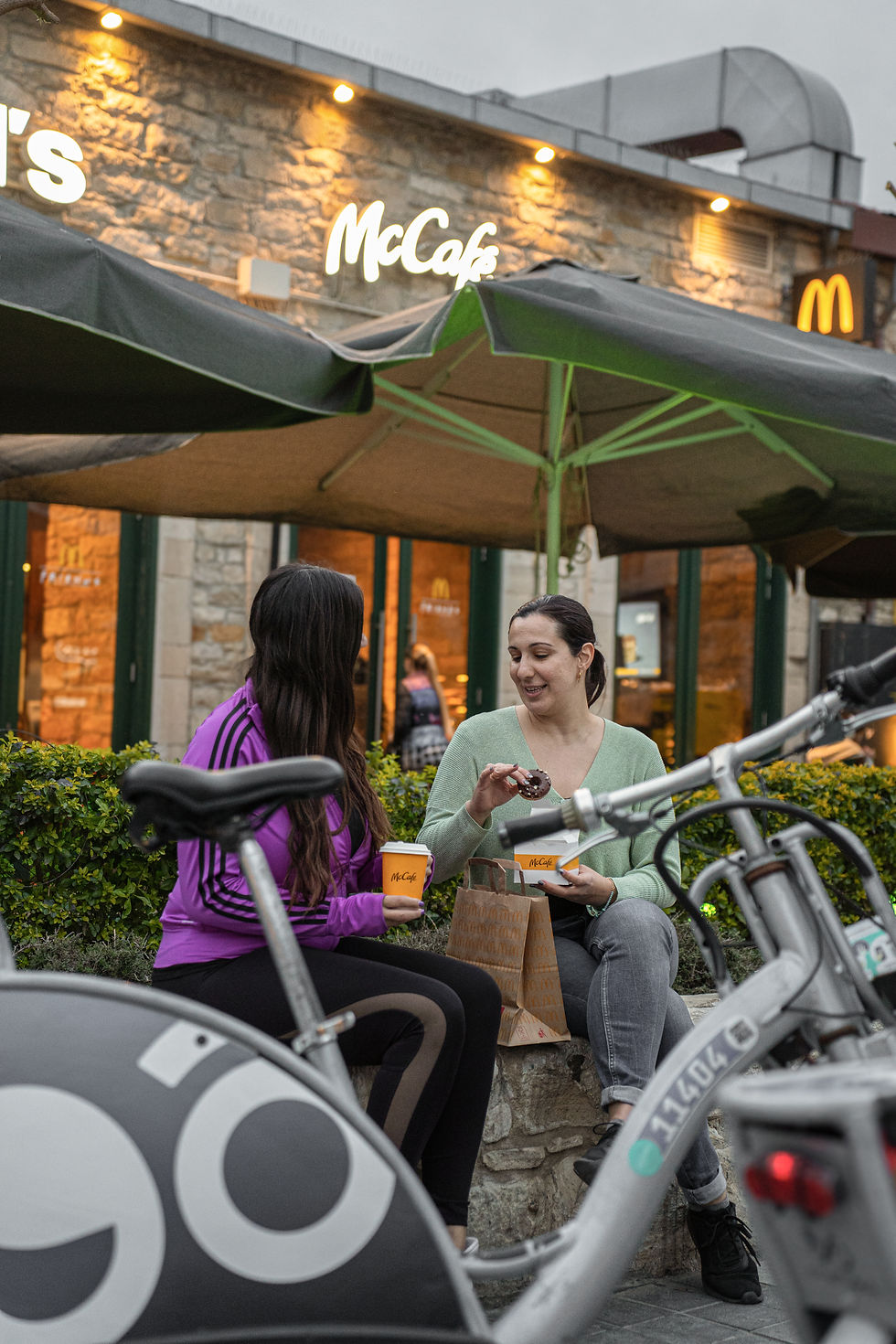
The benefit is not only speed. It is flexibility. Shared bikes can help join up trips that do not fit neatly into a return journey. Ride from home to a station. Walk from the station to an appointment. Pick up another bike later to visit a friend or run an errand.
The same idea applies whether the trip uses standard bikes, bike sharing, or ebike rental where available. The point is simple: short trips become easier when the right vehicle is nearby.
Cycling can replace short car journeys without replacing every car journey
Cycling does not need to replace every journey to be useful. Some trips involve heavy loads, bad weather, caring duties, or distances that make driving the practical choice. The strongest case for shared bikes is the short car journey that could easily be done another way.
Short car journeys often create more friction than expected:
Short car trip
Short bike trip
Find the keys, join traffic, look for parking, walk from the parking space
Find a nearby bike, ride close to the destination, park responsibly
Short trips by car also add pressure to streets. Every extra vehicle takes up road space, even if it travels only a short distance. Parking pressure rises when many people drive to the same shops, cafés, schools, or services. Reducing even a small number of local car journeys can help keep streets clearer for buses, deliveries, emergency vehicles, disabled drivers, and people who genuinely need to drive.
There is also a space argument. A parked car uses far more kerbside space than a bike. In dense streets, that difference matters. More shared bike use can support streets that feel easier to walk through, cross, and spend time in.
Bike sharing supports more walkable and self-sufficient neighbourhoods
A walkable neighbourhood is not only about walking. It is about having realistic choices for short local journeys. Bike sharing strengthens those choices because it extends the comfortable range of a person travelling without a car.
A 10-minute walk might reach the nearest shop. A 15-minute ride might reach several shops, a school, a health service, a sports centre, and a group of cafés. That wider reach helps local places compete with out-of-town trips, especially for small errands and social visits.

This matters because local trips support local services. When people can reach nearby places without driving, the neighbourhood becomes more self-sufficient. Cafés, schools, shops, and public services are no longer separate destinations reached only by car. They become part of a daily network.
Bike sharing also helps people test cycling without buying a bike first. Ownership brings responsibilities: storage, locks, punctures, servicing, lights, and the worry of theft. A shared bike removes most of that. Pick one up, ride, and leave it at an approved location.
nextbike works alongside walking and public transport
The strongest transport habits often combine several simple options. Walk when the trip is very close. Ride when the distance is a little longer. Use public transport for longer journeys. Use a car when the trip truly needs one.
nextbike can fill the gaps between these choices.
For example:
Walk to a nearby café, then ride to a supermarket on the way home.
Take a train into town, then cycle the final 10 minutes to a class.
Ride to a local service appointment, then walk back through the high street.
Cycle to meet friends, then use public transport home if plans change.
This flexibility is especially useful because daily life rarely follows a perfect route. Plans change, bags get heavier, meetings move, weather shifts, and time runs short. Shared bikes give one more practical option without committing to ownership.
Try the short trip challenge
For one week, try replacing one car journey per day with a short bike ride, walk, or public transport link.
Choose trips that are realistic. A supermarket visit for a few items. A ride to meet friends. A local appointment. A journey to a station or school. Keep it simple enough that it can become normal.

After a few days, patterns usually become clear. Some car trips are harder to replace. Others feel surprisingly easy once the route is familiar. The aim is not perfection. It is to notice how many daily needs already sit within a short ride.
Shorter car journeys are often the easiest ones to change, and they are also the ones that add to local congestion and parking demand. Replacing even one of them can make a street feel less crowded, one trip at a time.
Open the app and discover what is within a 15-minute ride.


Comments