

Cycling Safely Through Darker Days Visibility Comfort and Winter Ride Tips
The ride home can feel very different once the clocks change. One week you’re cycling in soft evening light, the next you’re rolling towards a junction in the dark while car headlights, wet roads, and low sun all compete for attention.
That doesn’t mean winter cycling has to feel stressful. A few simple habits can make a huge difference to how visible, warm, and in control you feel. Whether you’re commuting, riding to the shops, using bike sharing, christmas, cold, dark evenings, or just keeping up a weekend routine, the aim is the same: be easy to see, stay comfortable, and give yourself more time to react.
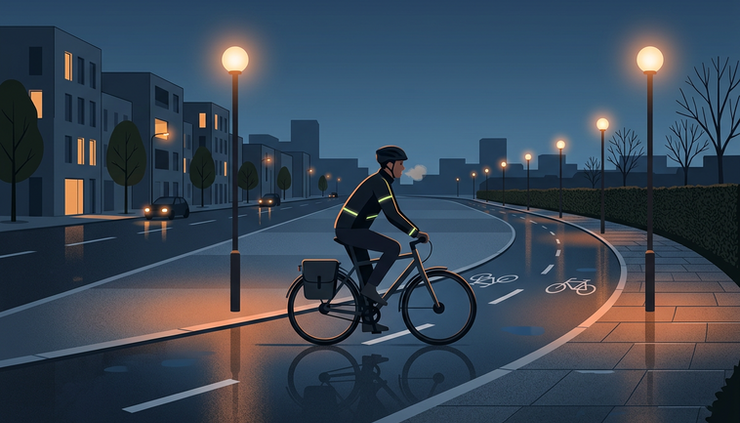
Darker days change what drivers and cyclists can see
Earlier sunsets catch people out. A ride that felt clear and easy in September can become dim and busy by late autumn, especially around commuting times.
Low winter sun brings another problem. When the sun sits close to the horizon, it can shine straight into drivers’ eyes, bounce off wet roads, and make cyclists harder to spot. Cyclists can struggle too, especially when riding towards glare or moving between bright patches and shadow.
Rain adds to this. Water on windscreens, mirrors, glasses, and roads can blur outlines and hide potholes. Even if you feel visible, someone else may not have seen you as early as you think.
A good winter mindset is simple: ride as if you need to be noticed earlier than usual. That means lights, reflective details, calmer route choices, and a little extra patience at the places where people cross paths.
Use front and rear lights whenever visibility is limited
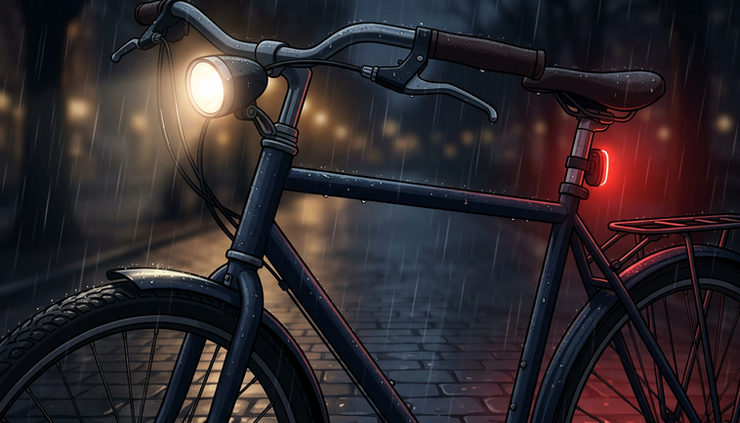
Lights are not just for pitch-black lanes. Use working front and rear lights whenever visibility drops, including at dusk, in heavy rain, fog, and shaded streets.
A white front light helps others see where you’re coming from. A red rear light helps drivers, riders, and pedestrians judge where you are from behind. Before you set off, check both are fixed securely and actually switched on. It sounds obvious, but winter gloves, rushed mornings, and low batteries make it easy to miss.
A few light habits help:
Charge or replace batteries before they run low.
Wipe mud and rain off light covers.
Keep lights visible, not hidden by a coat, bag, basket, or long scarf.
Carry a small spare light if you ride often after dark.
If you use a shared or rental bike, don’t assume the lights are fine. Take a few seconds to check them before riding away. That small pause matters, especially during bike sharing, christmas, cold, dark, rental trips when streets can be busy and weather can change quickly.
Add reflective details where movement catches the eye
Lights help people see you, but reflective details help show your shape and movement. That makes it easier for others to understand that you’re a cyclist, not just a small light in the distance.
Good places for reflective details include:
Jackets and waterproof coats
Rucksacks, panniers, and shoulder bags
Helmets
Gloves
Trouser bands
Shoes or shoe covers
Shoes and pedals move as you ride, so reflective details near your feet can be especially noticeable. You don’t need to dress head to toe in bright kit. A few well-placed reflective patches can make you stand out much more clearly.
If you already own a dark jacket or bag, reflective stickers, straps, or clip-on pieces can be a simple fix. The goal is contrast. You want to be visible from the front, back, and sides, not only from one angle.
Choose calmer routes when you can
The fastest route is not always the best winter route. In darker months, a slightly longer ride on quieter, better-lit streets can feel much safer and more relaxed.
Look for routes with:
Good street lighting
Lower traffic speeds
Separated cycle paths where available
Fewer complicated junctions
Smoother surfaces and fewer large puddles
Try riding a new winter route during daylight first if you can. You’ll spot awkward turns, rough patches, hidden kerbs, and places where parked cars block sight lines.
Calmer routes also reduce the number of decisions you need to make at once. That matters when visibility is poor and everyone has less time to react.
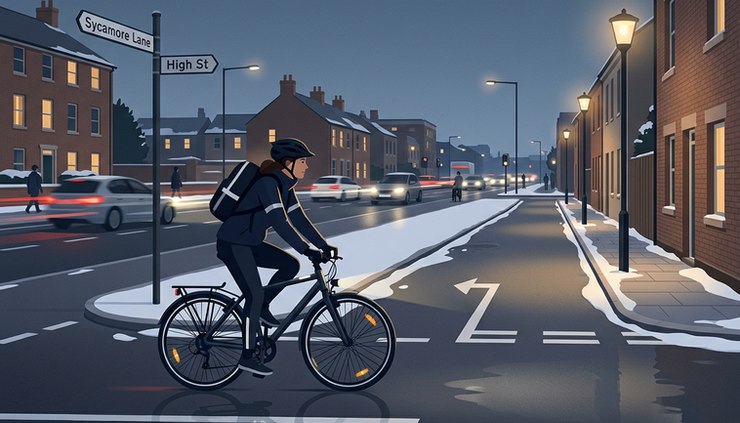
Slow down where surprises happen
Junctions, crossings, and driveways deserve extra care in winter. These are the places where people change direction, step out, turn across your path, or pull out without seeing clearly.
Reduce speed before you reach them, not once you’re already in the middle of the hazard. Cover your brakes, look for movement, and make eye contact where possible. If you’re unsure whether someone has seen you, assume they haven’t.
Take special care near:
Side roads
Shop entrances
School gates
Car parks
Bus stops
Driveways with high walls or hedges
A slower approach gives you more room to stop. It also gives drivers and pedestrians more time to understand where you’re going.
Skip headphones when conditions are poor
Music or podcasts can make a ride feel easier, but headphones are risky when visibility and road conditions are poor. Your hearing helps you notice vehicles approaching from behind, emergency sirens, other cyclists, and people stepping into the road.
In winter, sound can warn you before sight does. A car on a wet road, a bus pulling away, or a cyclist calling out may reach your ears before you can see what’s happening.
If you really want audio, keep it very low and avoid blocking both ears. On dark, wet, or busy rides, the safest choice is to keep your ears clear and your attention on the road.
Keep warm, dry, and able to control the bike
Comfort is not just about feeling cosy. Cold hands, wet feet, and soaked pockets can distract you and make the bike harder to control.
Waterproof footwear or shoe covers make rainy rides far more bearable. Wet shoes can stay cold for hours, and numb feet can make it harder to pedal smoothly. If you ride often, shoe covers are a small item that can make winter feel much less miserable.
Gloves are essential once the temperature drops. Choose a pair that keeps your hands warm but still lets you brake and change gear easily. Thick gloves that make your fingers clumsy can be just as annoying as no gloves at all.
Keep your phone, keys, wallet, and spare layers in a waterproof bag or pouch. Even a simple dry bag inside a rucksack helps. It’s much nicer to arrive with a working phone and dry clothes than to discover rain has soaked everything through.
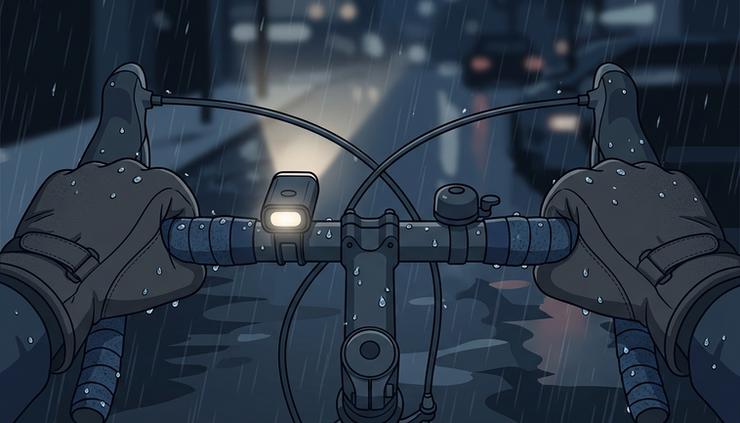
Do a quick pre-ride check before you go
A winter check doesn’t need to take long. Give the bike a quick look before each ride, especially if it’s been stored outside or used in rain.
Brakes Squeeze both brake levers before setting off. The bike should stop smoothly without the levers pulling all the way to the handlebar.
Tyres Press each tyre with your thumb. They should feel firm, with no obvious cuts, bulges, or bits of glass stuck in the tread.
Lights Switch on the front and rear lights. Check they’re bright, secure, and not covered by bags or clothing.
Saddle height Make sure the saddle hasn’t slipped. A saddle that’s too low can make pedalling harder, while one that’s too high can make stopping feel awkward.
General condition Look for anything loose, rubbing, cracked, or hanging off. Lift the bike slightly and listen for odd rattles. If something feels wrong, sort it before riding.
This check is especially useful after heavy rain, a knock, or a long time without riding.
Make winter riding feel easier, not harder
Darker days ask for a bit more planning, but they don’t have to stop you riding. Use lights early, add reflective details, choose calmer routes, and slow down where people and vehicles cross your path.
Then look after your comfort. Dry feet, warm hands, and protected belongings can turn a cold wet ride from a chore into something manageable.
Before your next dark ride, take two minutes to check your bike and kit. If you can see well, be seen clearly, and stay in control, winter cycling becomes much less daunting.


Comments